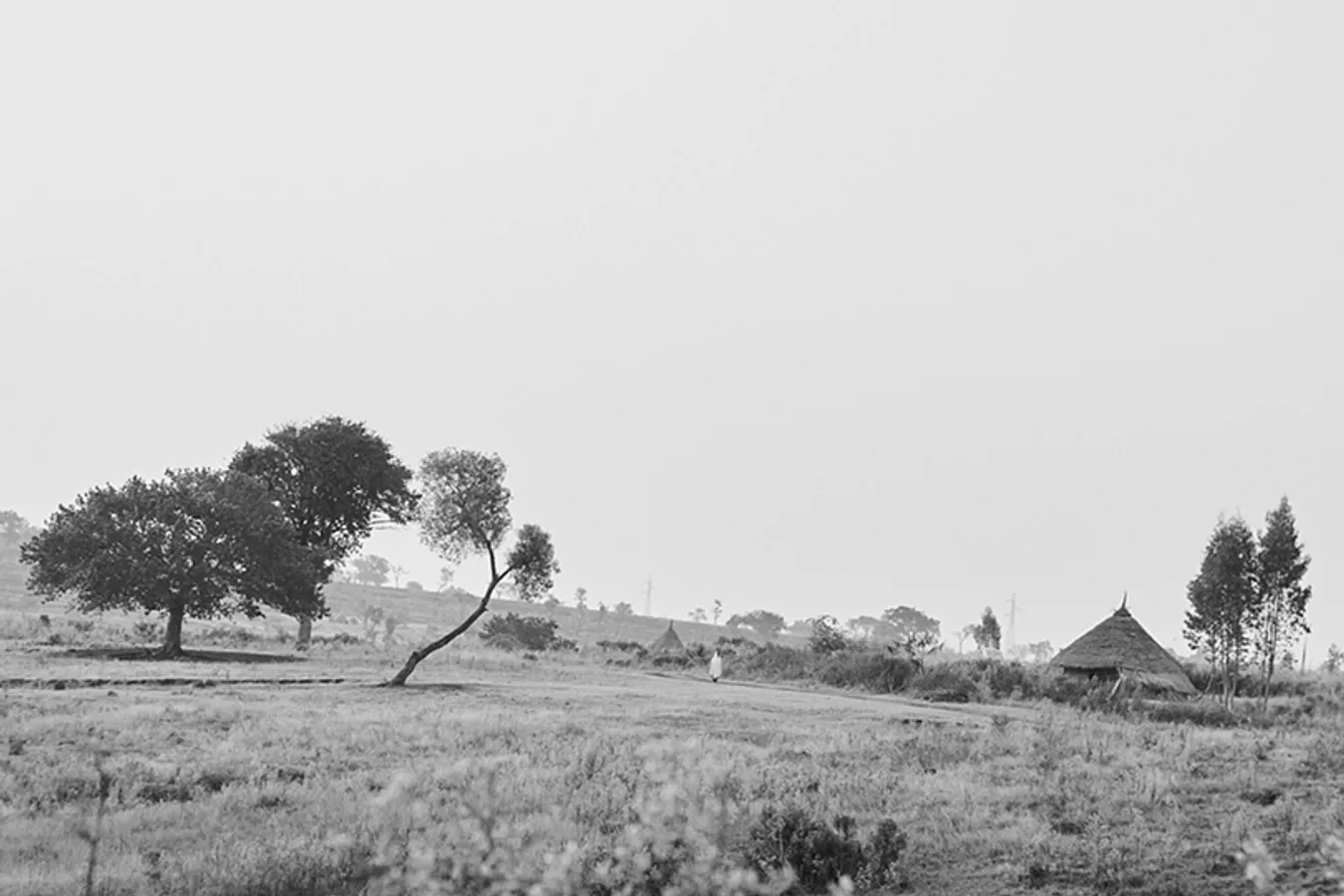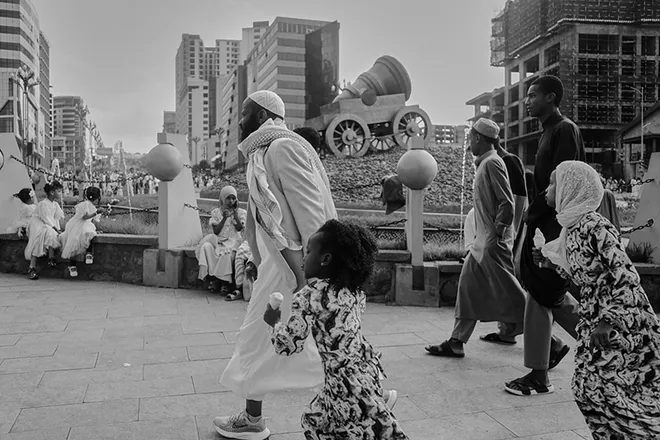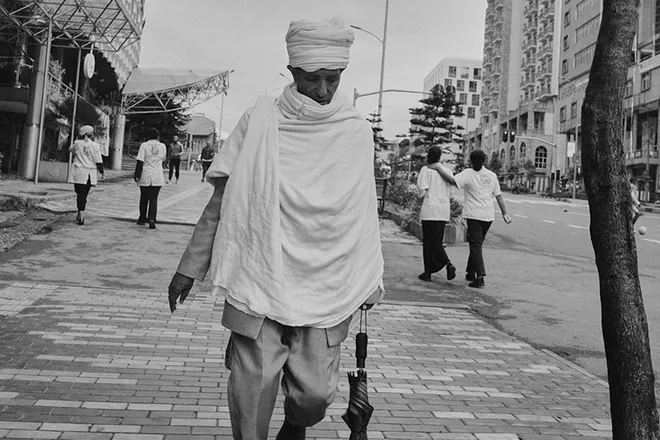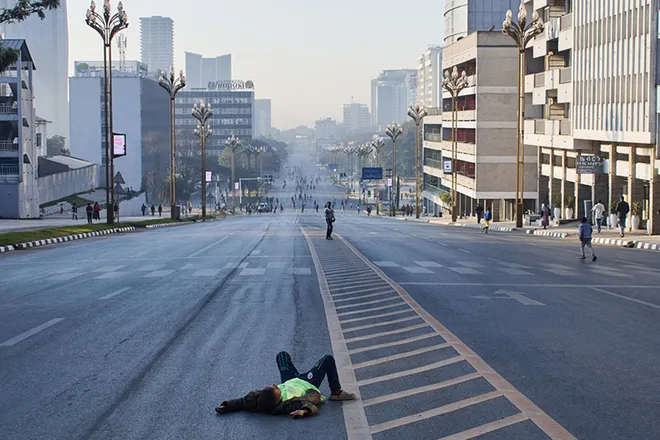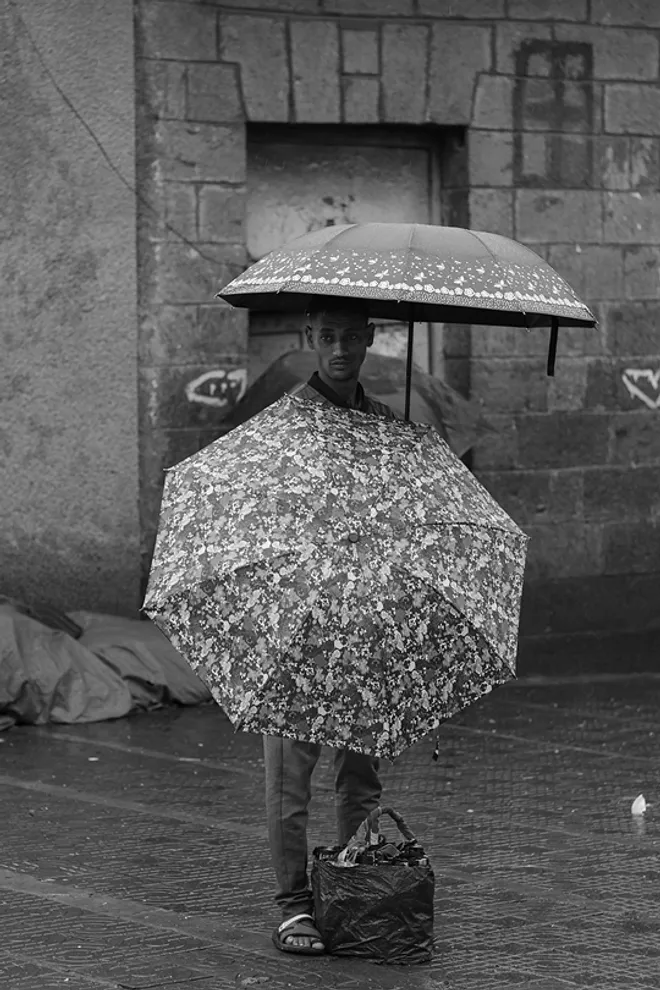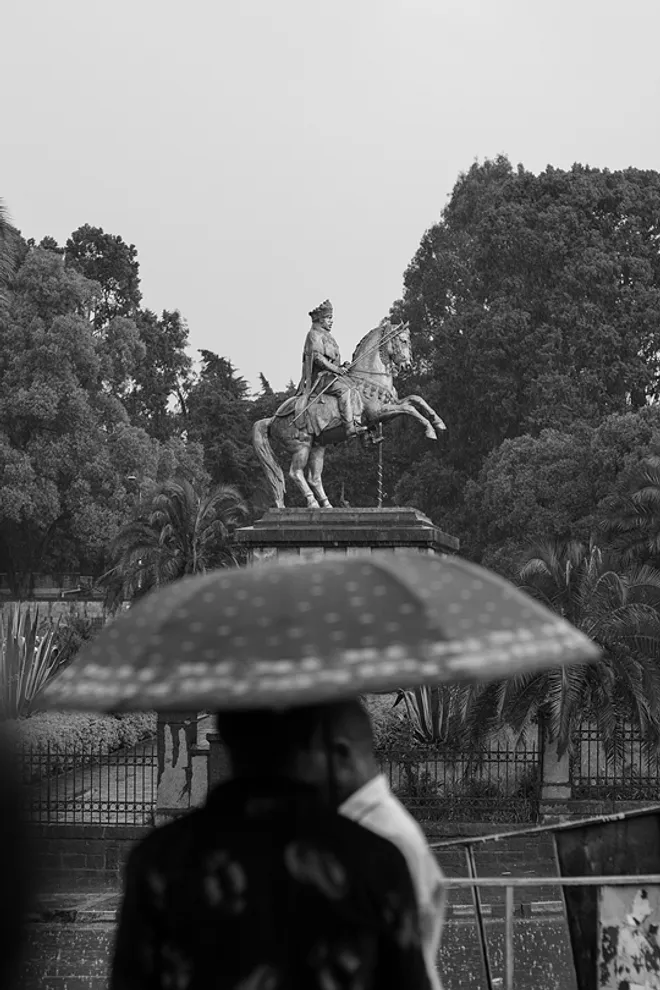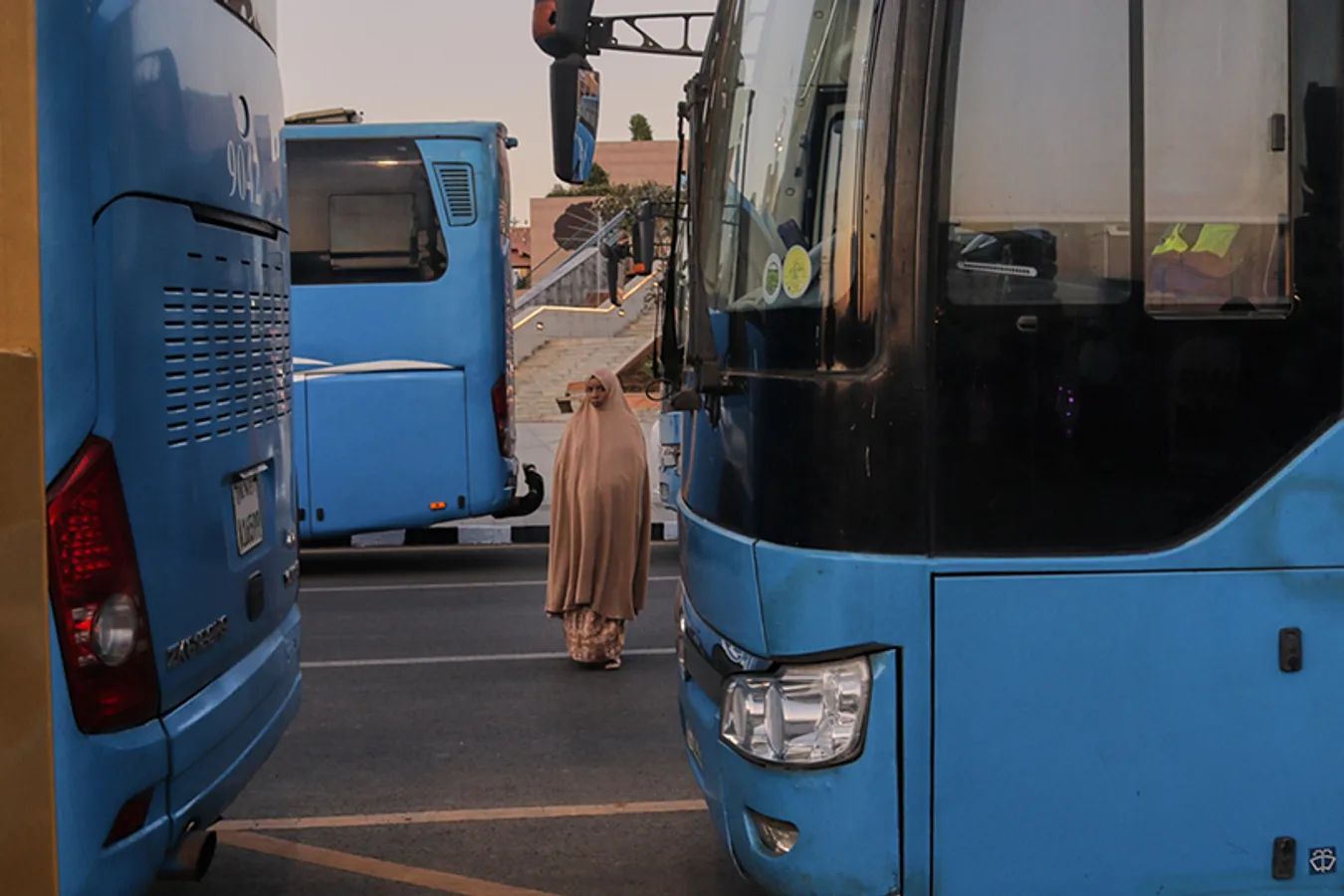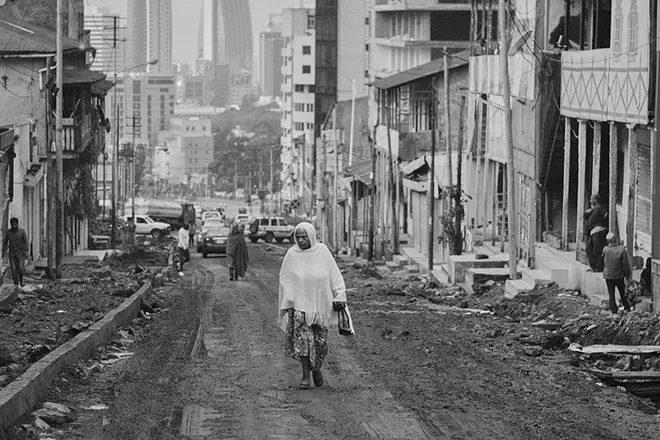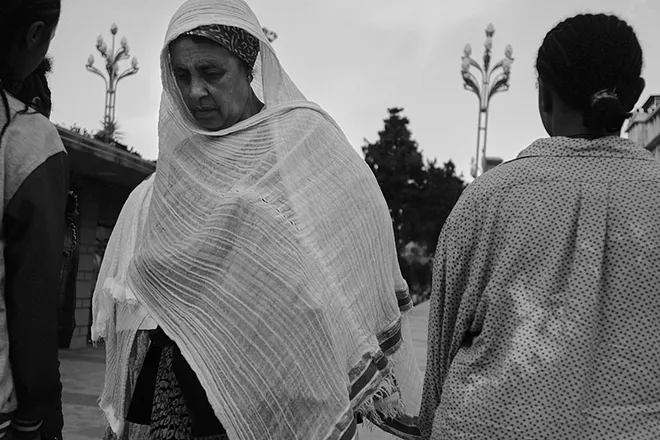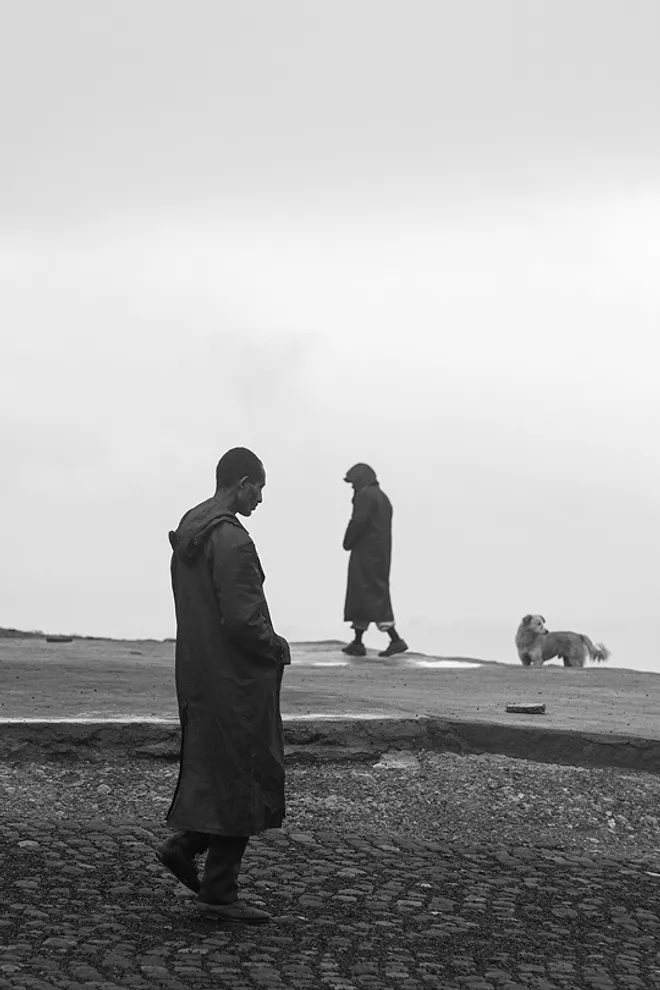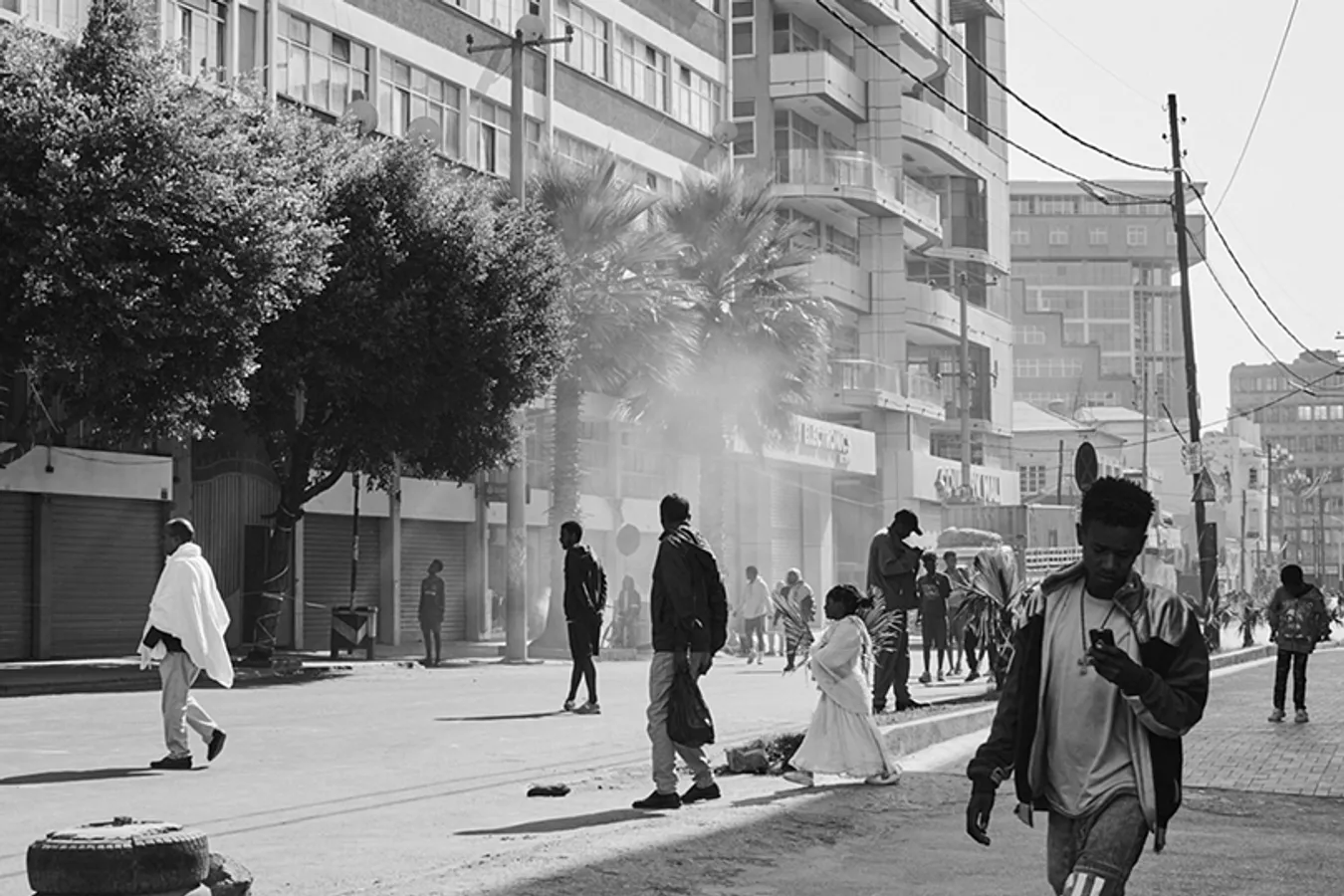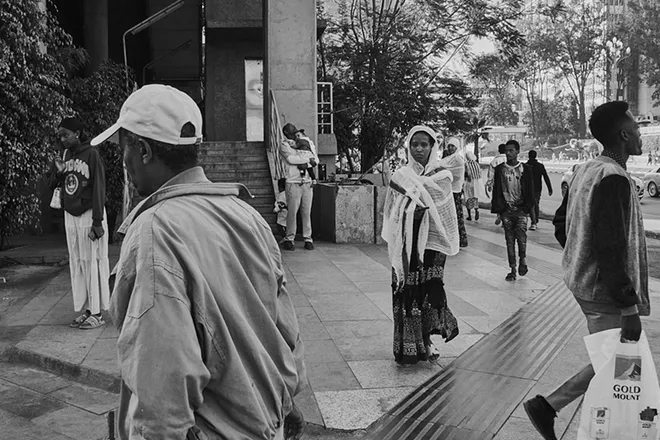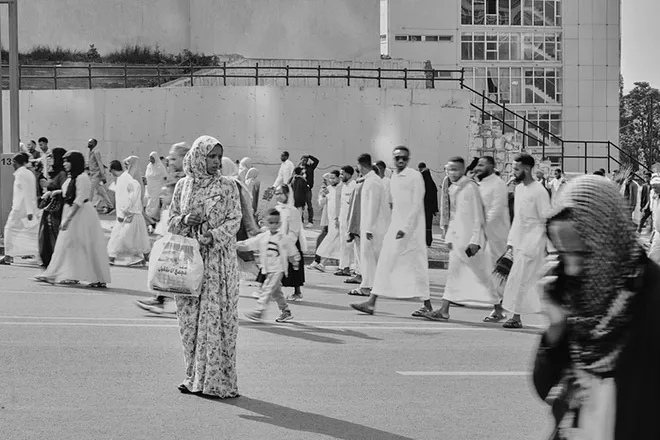
Nahom Nigussie is a 25-year-old Ethiopian photographer. His work centres on street photography and social documentary practices. His photography journey began with using a mobile phone camera in ninth grade.
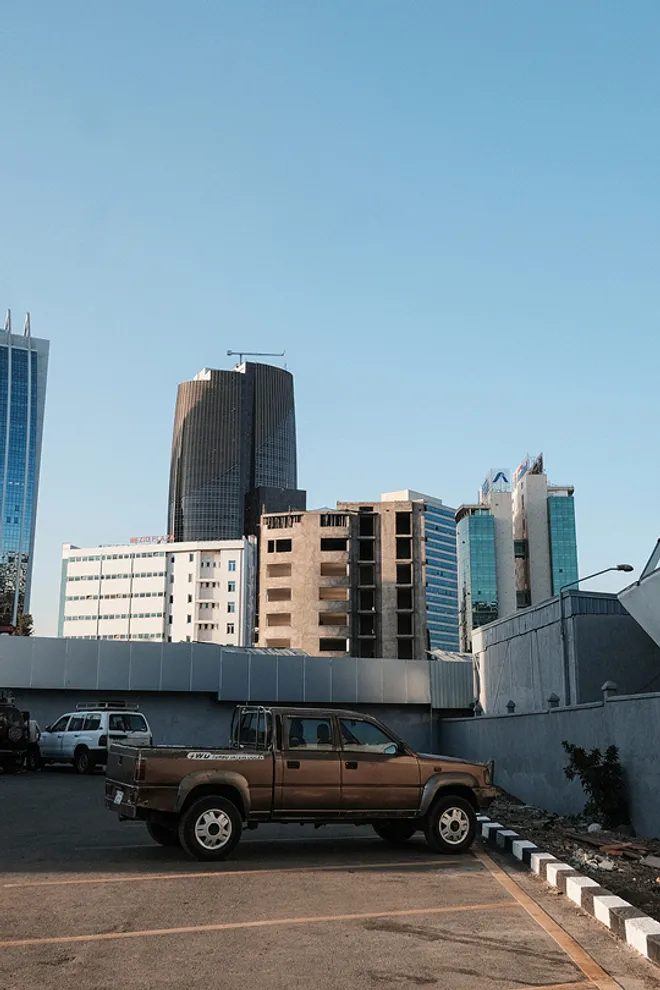
2020 marked a significant shift in his practice as he transitioned to using a digital camera. Since then, he has consistently explored the streets of Addis Ababa, using the city as both subject and context.
The Addis Foto Fest exhibition in Addis Ababa exposed Nahom to new perspectives and possibilities within photography. It was through this exhibition that he discovered photography is not only a tool for documentation but also a form of expression and critical engagement. The work of Aïda Muluneh played an important role in this shift of perspective, as his work revealed the depth of African photographic voices.
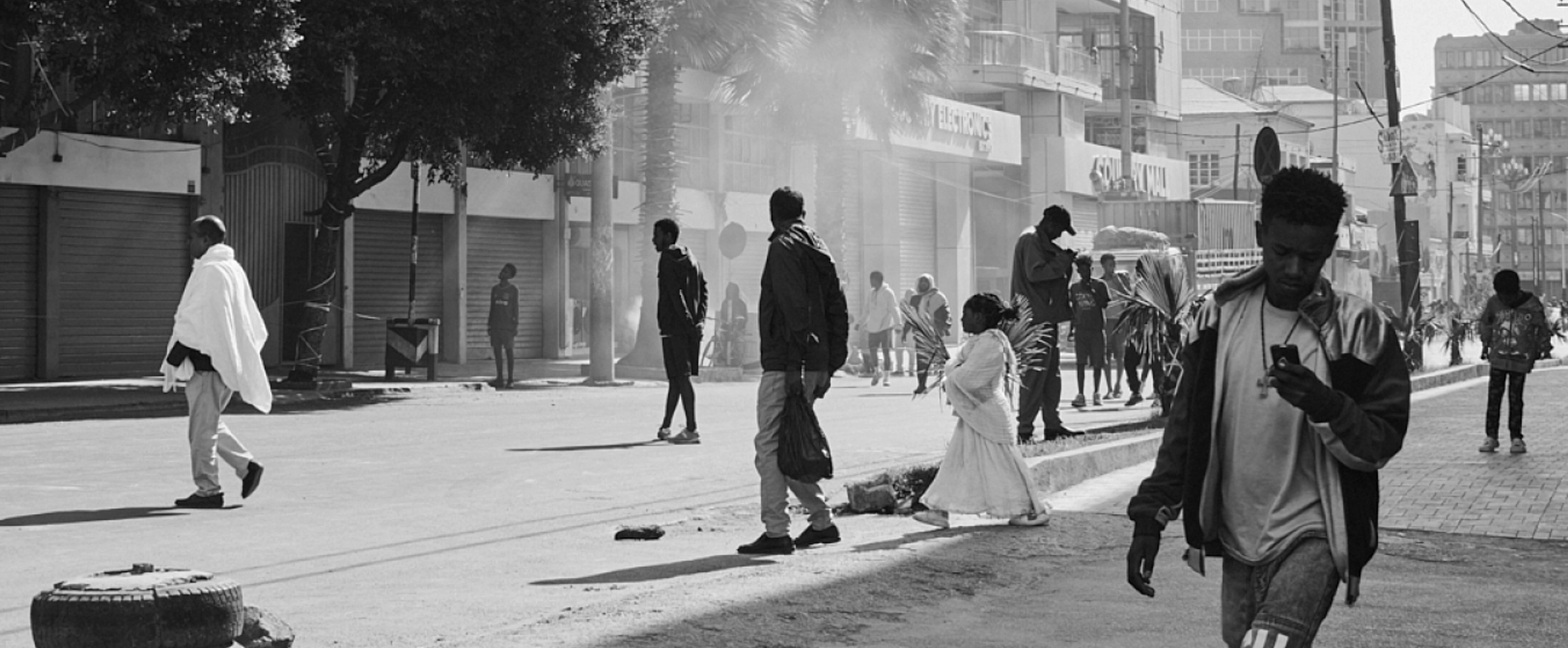
His work engages with everyday life, the rhythm of urban spaces, and the subtle interactions that define public experience. His images often reveal tensions between past and present, tradition and modernisation, intimacy and anonymity — creating a layered narrative of a city in flux.
Alongside his documentary work, Nahom is dedicated to developing his street photography practice, capturing spontaneous and unfiltered moments that reflect the complexity of urban life.
His photographs are characterised by a sensitivity to light, gesture, and composition, as well as an instinct for timing that brings out the poetic qualities of everyday scenes.
Nahom’s work contributes to the visual archive of contemporary Ethiopian life while also challenging perceptions and prompting reflection on contemporary Ethiopian life.